
Start a Dickenson County Property Records Search
Most searches begin at the Property Card Information Search. That Dickenson County tool accepts an owner name, a parcel number, or an address. Pick the key that fits your situation. An address works when the parcel is known by its current road name, an owner name helps when several parcels may be tied to one person, and the parcel number guarantees a match across systems. A property card can include a summary, improvements, a sketch, and photos when available. It does not promise every value, sale, or deed field. Treat each result as a lead to verify.
The right path depends on the question. The card and the GIS viewer locate a parcel. The Clerk's land records show which deeds and instruments were actually recorded. Tax services reveal payment status. None of these is the last word. A map line is not a surveyed boundary, and a card is not a title opinion. Before moving to another office, save the parcel number, the exact spelling of the owner name, and the legal description. Those details keep the trail from going cold.
- Search the county property card by address, owner name, or parcel number.
- Save the parcel number and compare the situs address with the mailing address.
- Use the legal description and owner names to find the deed with the Circuit Court Clerk.
- Check the real-estate inquiry for tax payment context and open the GIS map for location.
- Ask the custodian for an office copy or a FOIA record when the needed item is not online.
Where Dickenson County Keeps Property Records
Function divides Dickenson County property records. Each office keeps its own piece. The Circuit Court Clerk records land instruments and keeps the deed files. Assessment records and the property-card search belong to the Commissioner of Revenue. Tax-balance questions go to the Treasurer's payment tools. County online services tie the card search, archived cards, real-estate public inquiry, tax maps and books, and WebGIS together in one hub, though a link there does not promise that every underlying record is complete online.
Dickenson Circuit Court Clerk
119 Courthouse Lane, Clintwood, VA 24228
276-926-1616
Commissioner of Revenue
County offices: 818 Happy Valley Drive, Clintwood, VA 24228
General county line: 276-926-1676
Treasurer and Online Services
County offices: P.O. Box 1098, Clintwood, VA 24228
Specific Treasurer phone and fee schedule were not published in the inspected source.
Dickenson County's Online Service Menu
The county's Online Services page gathers the property-card search, archived cards, personal-property inquiry, real-estate public inquiry, tax payment, tax maps, tax books, and the GIS link. Each entry leads to a separate tool. The regular property-card search takes an owner name, a parcel number, or an address, while the archived-card route requires a card number. Tax books come as Excel files. Tax maps are linked in PDF or JPG form.
The hub also works as an index when a saved bookmark stops working or a familiar service name changes. It does not state the years covered by archived cards, real-estate payment history, or tax books. Confirm those dates with the responsible office. For a difficult parcel, note which county link produced each result. Keep the parcel number with it.
The official hub presents the service paths in one place: Dickenson County online property and tax services.
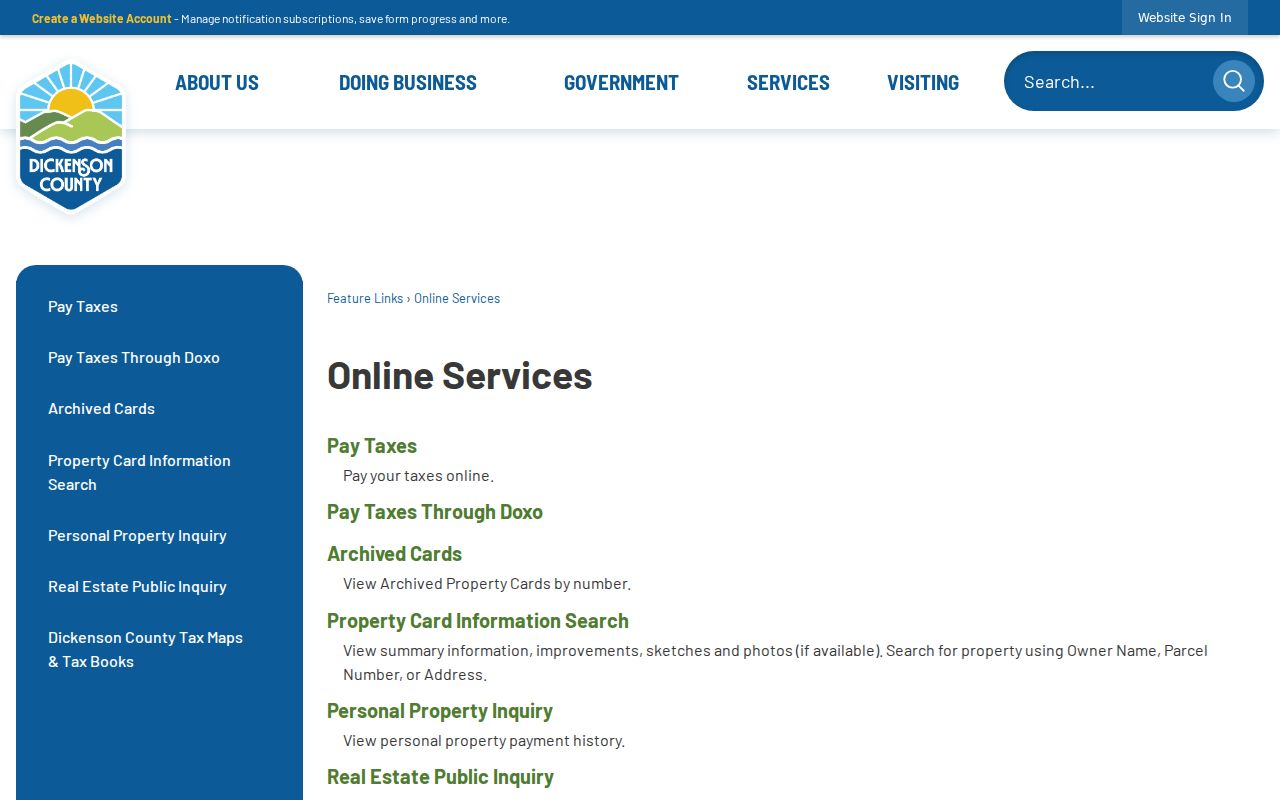
The county directory lists each service in one place. From there you can move between cards, tax files, and maps without losing your way, which makes it the safest starting point for a Dickenson County property search.
What Dickenson County Record Sets Contain
Each Dickenson County record set answers a different question. Assessment cards describe the tax parcel and its improvements. A deed or deed of trust documents an instrument recorded with the Clerk. Tax history shows payment, not title. A parcel map adds geographic context, and court files can reveal a dispute or order touching the land.
| Record Type | What It Documents | Kept By | Access |
|---|---|---|---|
| Deeds and deeds of trust | Recorded transfers and security instruments | Circuit Court Clerk | Office access; copies are 50 cents per page |
| Assessment cards | Parcel summary, improvements, sketches, and photos when available | Commissioner of Revenue | Public card search and archived-card route |
| Tax payment records | Payment inquiry, balance, and tax context | Treasurer / county services | Real-estate public inquiry; years not stated |
| Maps and plats | Tax parcel geography, lot descriptions, and recorded plats | County GIS / Circuit Clerk | WebGIS, PDF/JPG tax maps, or Clerk request |
| Court and probate files | Orders, disputes, fiduciary actions, and case events | Circuit Clerk / Virginia Courts | OCIS where available; clerk file for full record |
Match the tool to the task. Use the deed index to confirm a recorded transfer, the tax inquiry to check payment, and the card to read assessment details. A deed often carries the legal description that matches a rural tract after its street address changes. The record pages cover copies and tax bills.
Dickenson County Deed Books Begin in 1880
Dickenson County was organized in 1880. The Library of Virginia catalog opens with Deed Book 1, covering 1880 to 1886. Its microfilm listings run through Book 16. Grantor and grantee indexes carry the land-record trail through 1972. That date marks the cataloged index material. The Clerk's website publishes no live deed-index start year or imaging cutoff.
For a chain that predates public web tools, the Library's county catalog points to the right reel, and a local library can arrange an interlibrary loan. A name index is only a finding aid. Confirm the deed page. Compare its tract, acreage, adjoining owners, and exceptions. If the chain reaches before 1880, search predecessor-county records as well as Dickenson's earliest books.
The Library of Virginia's Dickenson County microfilm catalog identifies the book and index runs for older land research.
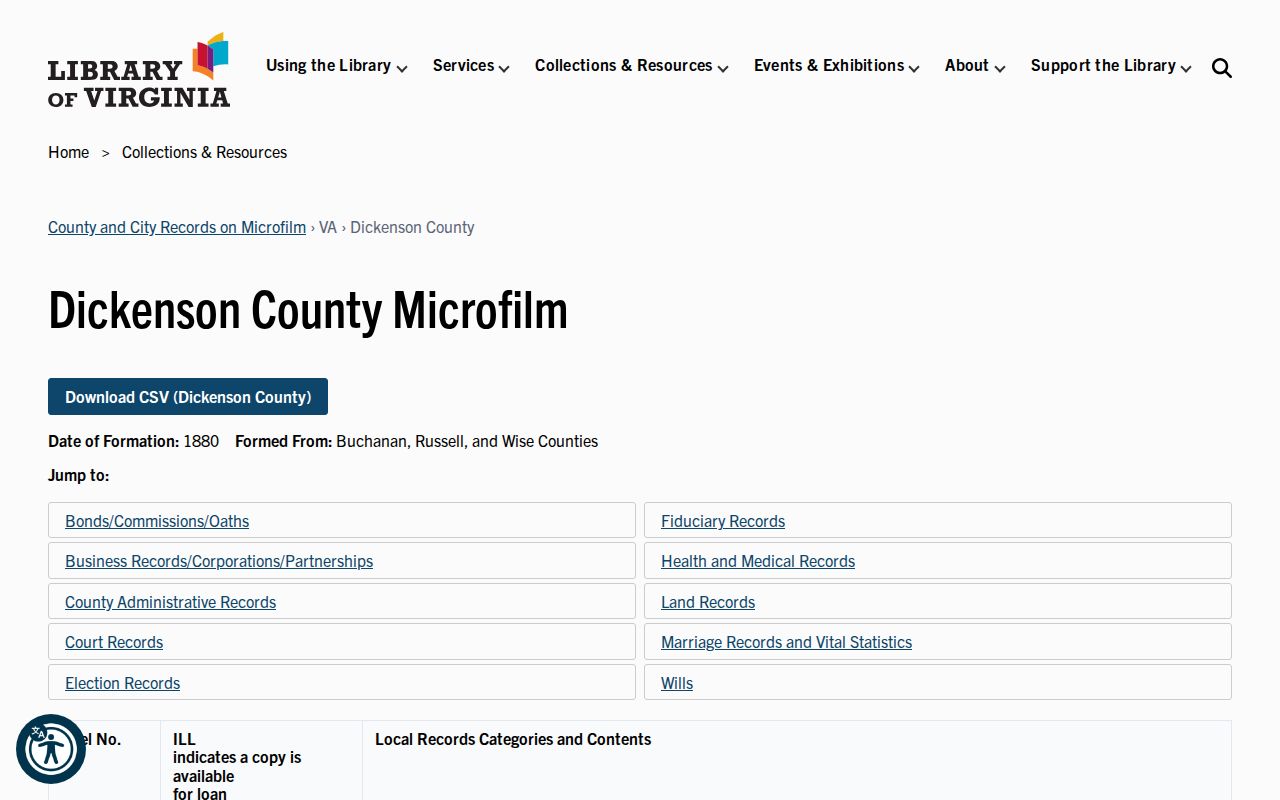
The catalog leads to a reel description. It is no substitute for the deed image or the Clerk's original record.
Dickenson County Parcels on WebGIS
Dickenson County parcels come alive on the map through Dickenson County WebGIS, reached from the county's Online Services page. Type in what you know and the viewer connects an address to a parcel polygon on screen. The available tools vary. Selection, measurement, printing, and download options depend on what the viewer offers at any given moment, so explore the live interface rather than assuming. Whatever the map draws is tax-map reference information. It sets no legal boundary. A survey still settles boundary questions.
Tax maps are their own channel in Dickenson County. The online-services hub posts PDF and JPG map files alongside tax books in Excel form. A recorded plat can reveal a lot line, easement, dedication, or change the tax map never shows. When a boundary matters, lay the legal description beside the plat and the survey. Never infer ownership from a color on screen.
Start any parcel-geography question with the county-linked GIS viewer.
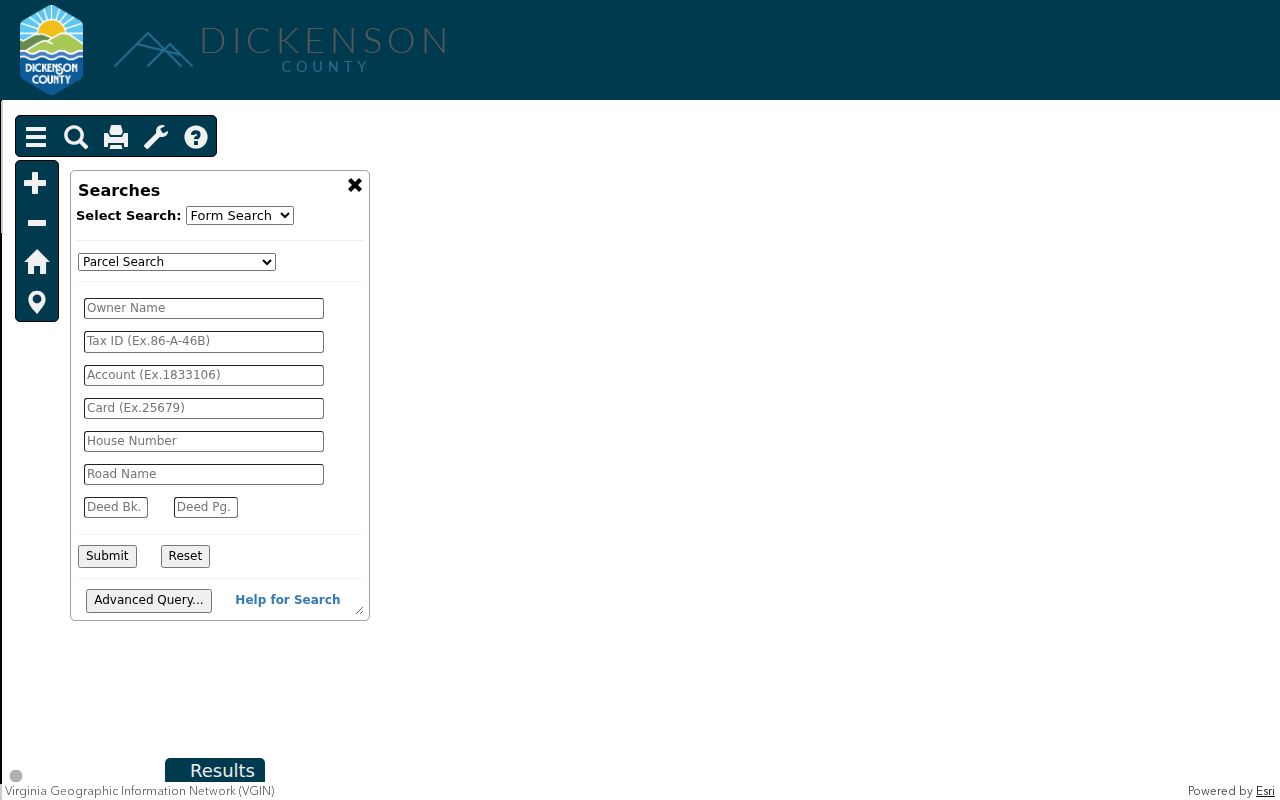
The county-linked map opens at its official destination. Layer names and the currentness of the underlying data should be checked inside the live viewer itself.
Dickenson County Situs and Parcel Clues
In Dickenson County, one property can carry three different identifiers. The situs address marks where the assessed land sits. The mailing address is simply where tax bills travel. The legal description, spelled out in the deed, defines the actual parcel conveyed. Rural routes, PO boxes, renamed roads, and community labels all trip up an address-only hunt, so an older deed can slip past a careless search. Keep variant spellings and tract clues handy.
The county property card supports lookups by address, owner, and parcel number, though Dickenson County publishes no exact parcel-number format and no promise that a street search returns a block list. Use whatever parcel key the county itself returns. Carry that number to the map. Then lean on the deed's legal description to sort out splits, combinations, or a conveyance of only part of a tract. Remember that a ZIP code is postal geography, not proof that land sits inside Clintwood.
- Situs address
- The location used for the assessed parcel; it may differ from the owner's mailing address.
- Legal description
- The deed's written land description, often more useful than a modern street line for an older tract.
- Parcel number
- The county's cross-system key; preserve its exact punctuation and digits because no format guide is published.
Dickenson County Court Records Touch Land
Some land questions end up in court. A partition, judgment, probate file, or quiet-title suit can decide title. It can decide who holds title to a Dickenson County parcel. Virginia's Online Case Information System allows a name search with customizable court criteria. Circuit participation varies across the state. An empty result, in other words, does not prove no Dickenson County case exists. The local Circuit Clerk remains the fallback for complete files and archived material.
The local court page posts the courthouse address and hours. General District Court searches can run by plaintiff, defendant, case number, or hearing date. But several protected case categories never appear online. Federal bankruptcy and related litigation may require PACER. A docket summary only points the way. Pleadings, exhibits, orders, and certified copies come from the court's custodian.
For the local source, the Dickenson Circuit Court contact page identifies the right office.
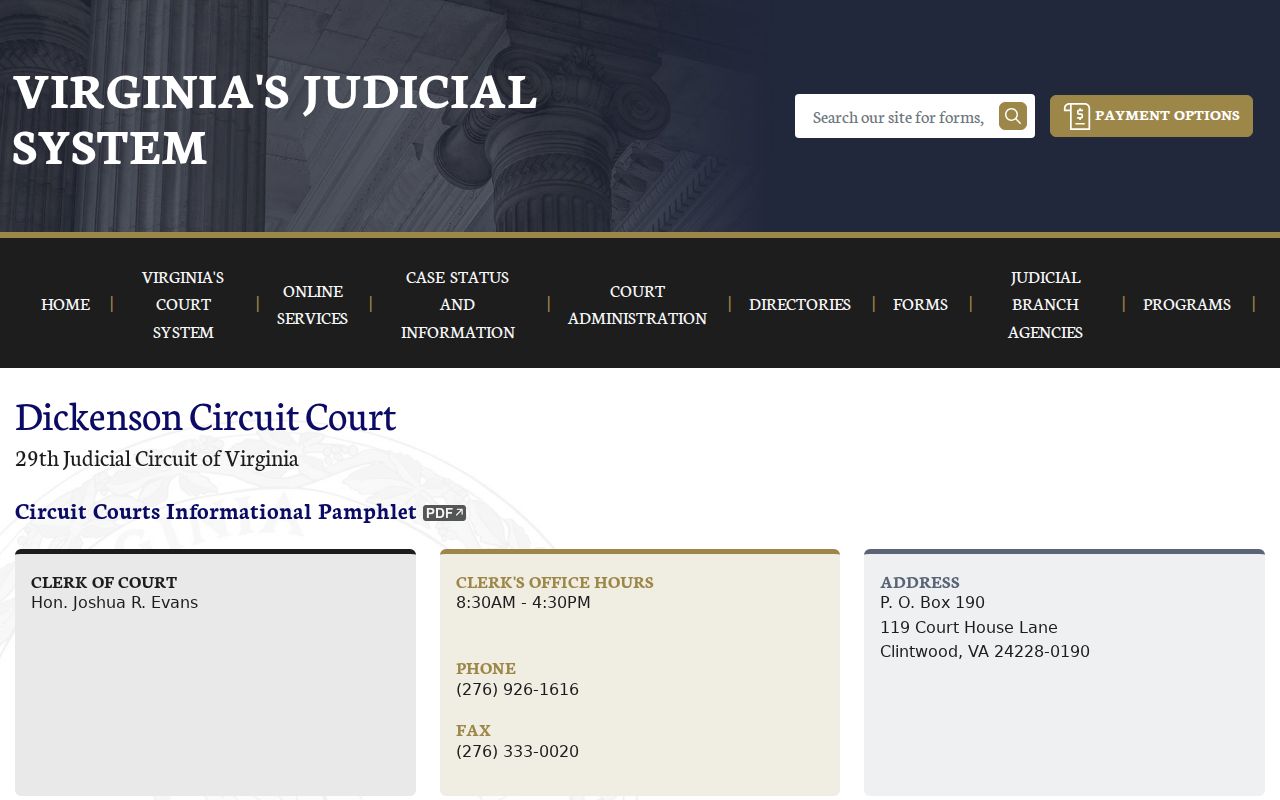
Turn to the local clerk when an online summary cannot say what order was entered or which land it touched.
The Virginia OCIS case search is a statewide entry point, limited by local participation.
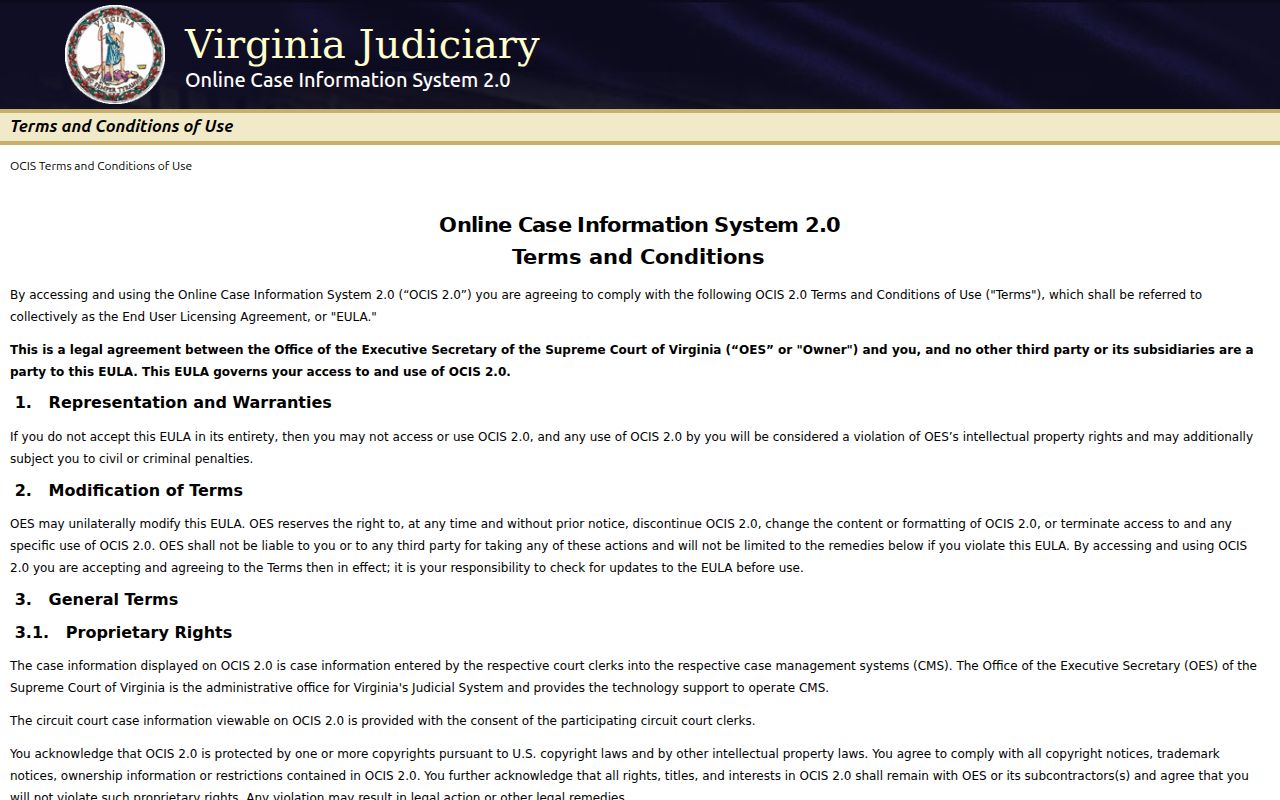
The landing page helps narrow a court and search criteria, but complete county files still run through the Circuit Clerk.
The Virginia General District Court search offers separate name, case-number, and hearing-date paths.
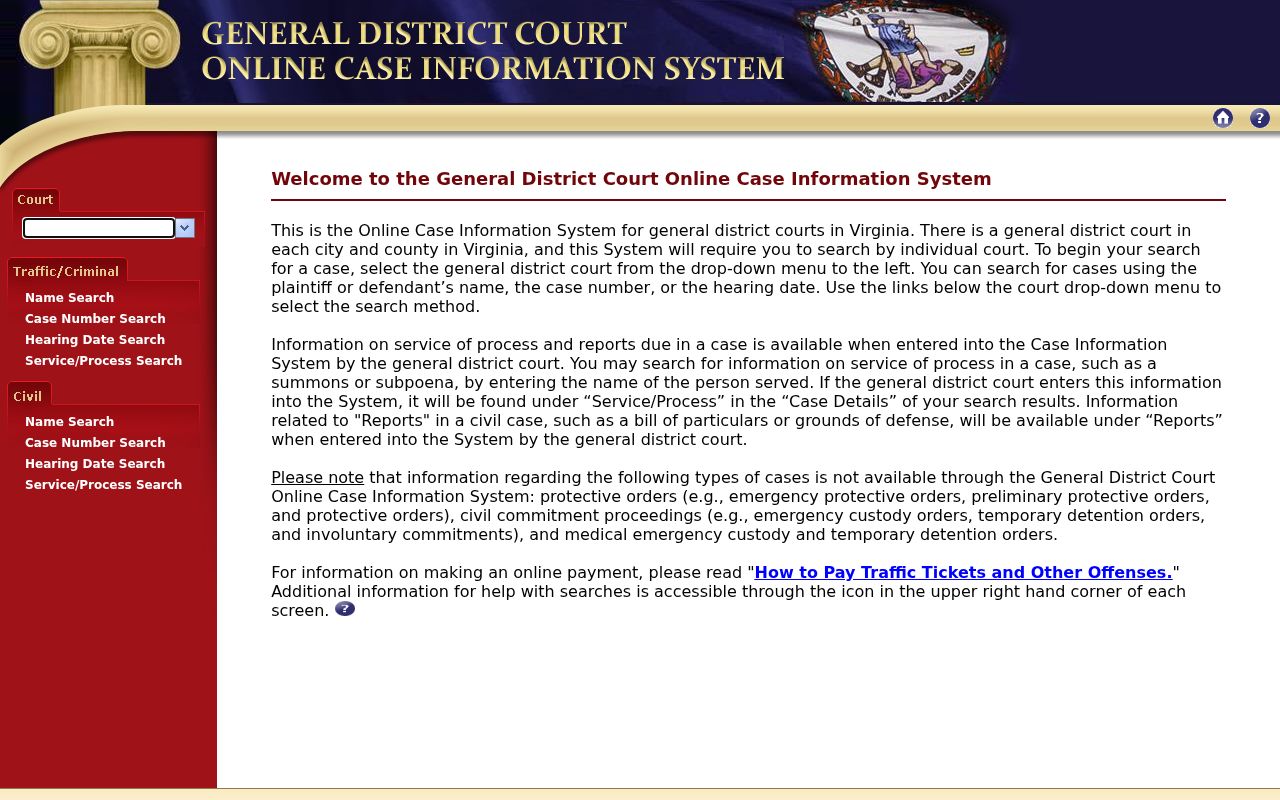
A General District docket may surface a civil case or money judgment; the court file and land records determine its legal effect.
Federal matters are reachable through PACER, which carries its own registration and per-page charges.
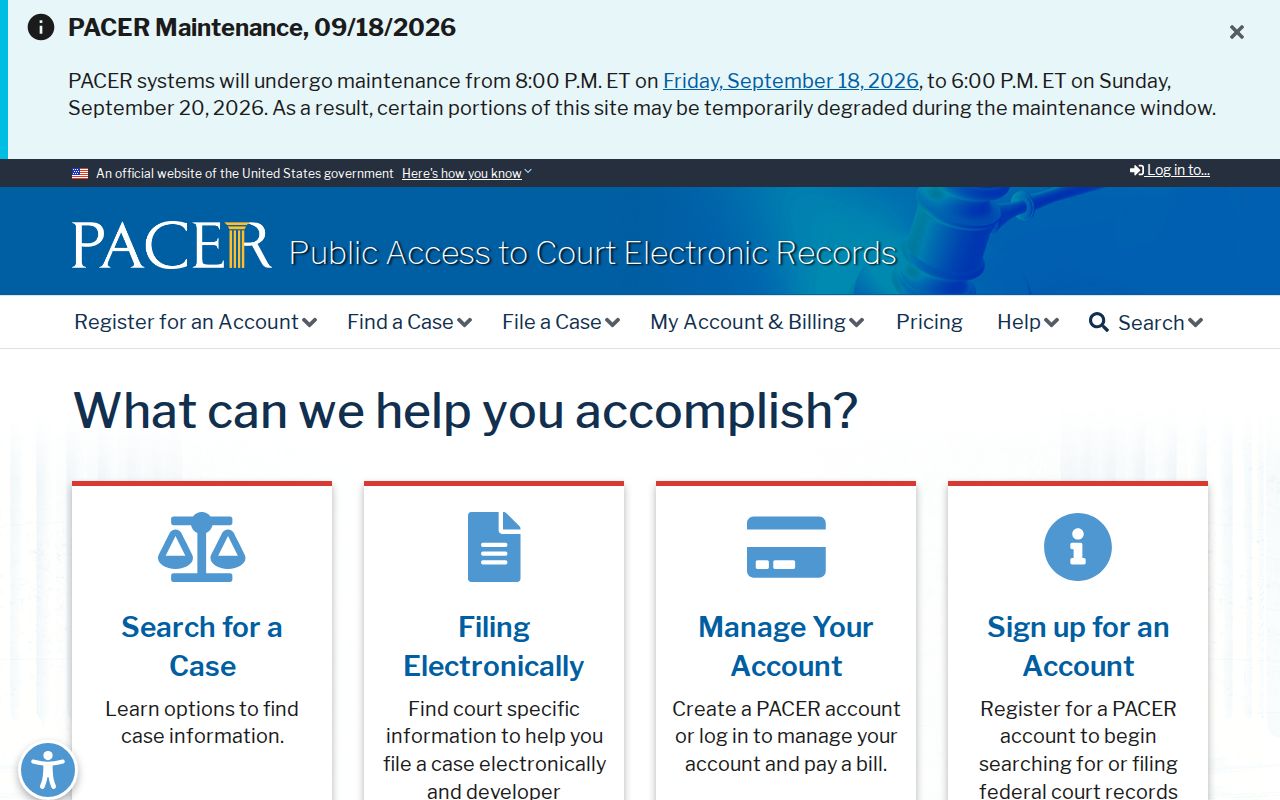
A federal docket never substitutes for recording the final instrument in Dickenson County land records.
Dickenson County Probate and Land Transfers
A death can reshape a deed chain fast. The Circuit Clerk's site links Wills and Probate. The Library of Virginia catalog lists the county's older fiduciary books. The instrument that follows may take several forms. It may be an executor's deed, an administrator's deed, a deed from heirs, a release, or a court order. A probate file may name an executor, heirs, an inventory, an accounting, or an order. It is not a current title opinion by itself. Match its land description to the deed record.
Those catalog entries are specific. Fiduciary order books run from 1906 to 1938. Fiduciary settlements run from 1898 to 1921. A commissioner of accounts book spans 1904 to 1930. Modern probate search coverage and copy fees are not published. Give the Clerk a name, an approximate date, and a case number if you have one. Then ask whether the file is active, archived, imaged, or office-only. Death and marriage certificates follow a separate VDH access rule.
Virginia's vital-records access guidance walks through the state request and identification route.
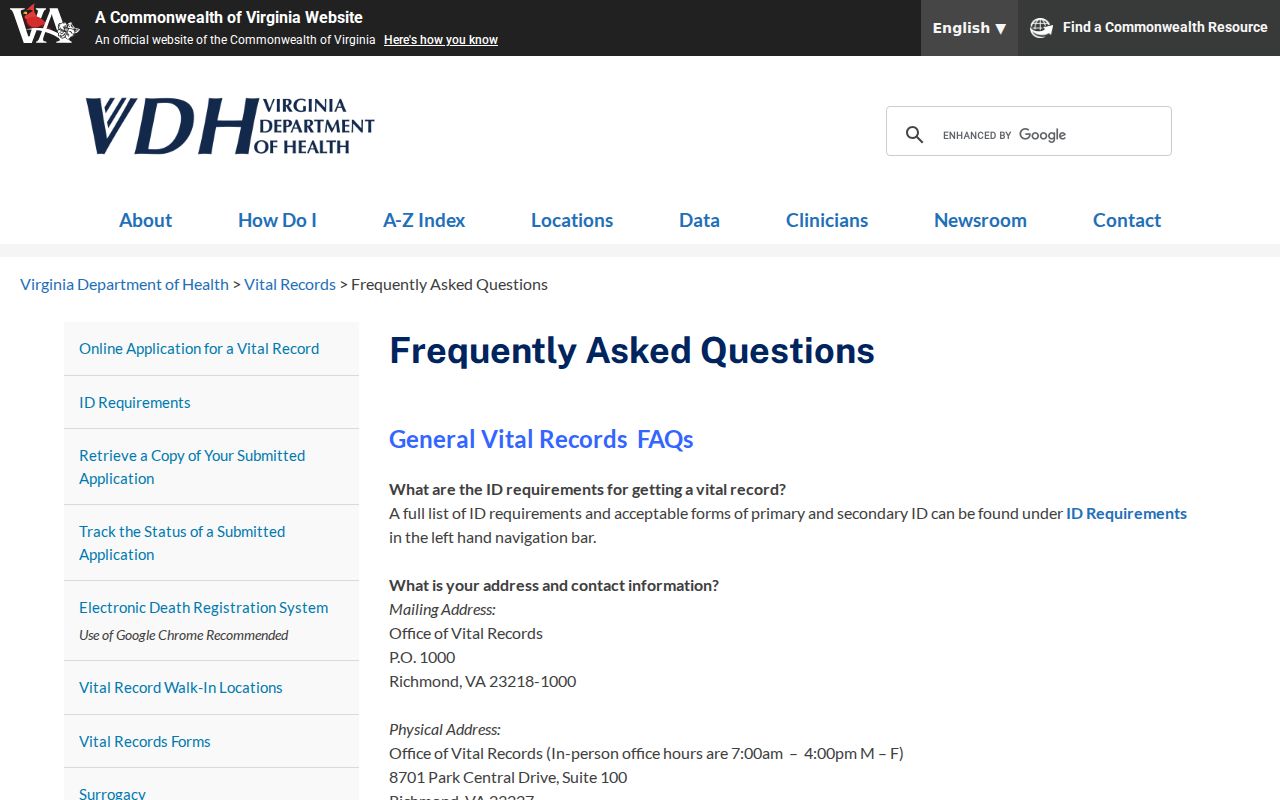
Vital records can strengthen a family-history lead, but only the deed or court order ties an heir to the land.
Dickenson County Records Have Access Limits
Two Virginia laws shape access. FOIA governs requests to public bodies. The Public Records Act handles how records are kept and disposed of. A good request names the office and the record type. It should also cite a parcel or case reference and a date range. Ask about search and copying costs first. Public-record status does not open every personal field.
Birth records open after 100 years. Death, marriage, divorce, and annulment records open after 25 years, subject to exceptions and redaction. Protected voter addresses must stay shielded. Safe at Home substitute addresses must also stay shielded even when other sources could be combined against them. The Virginia Department of Elections runs a limited citizen lookup. Full voter-file use follows separate election rules. The Virginia Department of Elections Citizen Portal offers that limited public lookup.
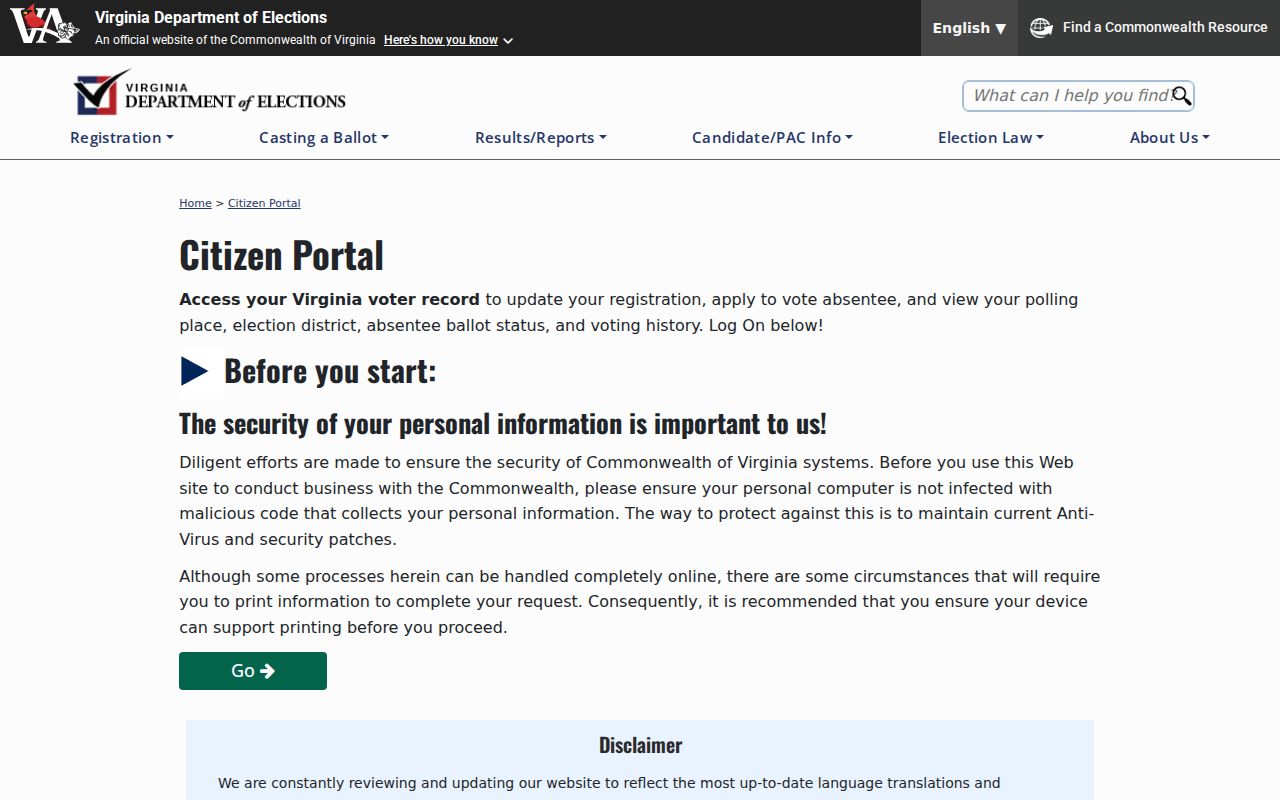
Protected voter details stay withheld. A voter entry alone proves neither ownership nor residence at a parcel.
Dickenson County Ownership Can Involve Entities
A parcel can be titled to an LLC rather than a person. The assessor owner field and the recorded deed remain the true property sources. The Virginia SCC Clerk's Information System lists an entity's name, status, registered agent, principal office, and filings. Use it to identify an entity. Watch the spelling. A trade name can differ from the legal entity name. Compare the exact wording on the assessor card against the deed and the SCC record.
Professional-license files play a different role. DPOR and other state boards can confirm a regulated licensee. But a license proves nothing about owning land or working on a given parcel. Use them only to clarify an entity or professional clue already found in the property records. An agent, manager, or mailing contact is not the owner of record. The Virginia SCC business filing search is the official route for entity details.
Entity filings explain the names behind an owner field, but they never replace the recorded land instrument itself.
Clintwood Is the Dickenson County Records Seat
Clintwood serves as the county seat. Even so, county offices hold the town's deeds, assessments, tax accounts, and parcel records. A Clintwood address belongs with the county, not a separate municipal recorder or assessor. County government sits at P.O. Box 1098, 818 Happy Valley Drive, Clintwood, VA 24228, with an administration line of 276-926-1676. The Circuit Clerk is at 119 Courthouse Lane, Clintwood, and lists 276-926-1616.
Countywide Census QuickFacts show 14,124 residents in 2020 and a 2024 estimate of 13,411. Those figures describe the whole county, not Clintwood or any one property. Near a town edge, check the municipal-boundary layer when the viewer offers one. Compare the parcel against it before assuming either jurisdiction. The town provides no separate permit or zoning search. Ask the responsible office directly rather than assuming a portal exists.
What Dickenson County Property Records Cannot Prove
Dickenson County property records can document plenty. They show an assessed owner of record, a recorded deed transfer, a tax payment, a map location, a filed case. They cannot guarantee clear title. They do not reveal every private agreement. They do not certify a legal boundary or set a sale price. A recent transfer may show up in the deed records. The assessment roll catches up later. A last-sale field may be missing or may not reflect a true market transaction. For a solid cross-check, start with the parcel number. Add the legal description and the newest relevant deed.
Use records lawfully. Dickenson County property records support property research, family history, due diligence, and civic review. They are not a title search or survey. Do not use owner details to stalk, harass, intimidate, or harm anyone.
When a public record sits outside any online portal, send a specific Virginia FOIA request to the office holding it. Boundary and title questions call for a qualified surveyor, title professional, or attorney after the actual instruments are reviewed.